



Online Safety @ Your Fingertips
The Safer Schools NI app brings you vital information and support, any time, any device, anywhere.
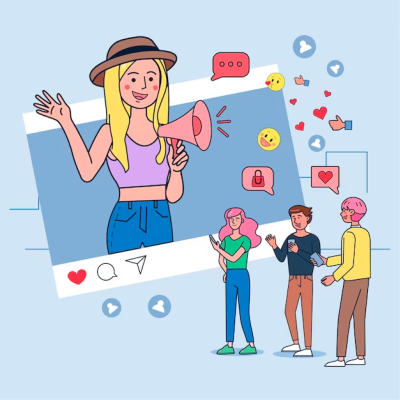
An influencer is someone with an online social media presence, usually with a large following, who uses their reach and platform to promote lifestyle choices, political opinions, or market products, services and goods.
The truth is that anyone can be an influencer, and some people are famous solely for being one. Popular influencers often create and sustain a close following from their fans, who might aspire to be more like them or see them as an ideal friend.

Understanding Parasocial Relationships
Parasocial Relationships are the one-sided relationship between an audience member and a performer. They occur when a person spends time, emotional energy and interest on performers in the mass media. This is often seen with celebrities or influencers and is considered normal.
- A young person might show interest in a celebrity, influencer or group because they find them entertaining and like to discuss them with friends.
- Sometimes these relationships can become more intense, where a person pays attention to attitudes, dress sense, food or the interests or products the influencer or celebrity promotes.
- Although these interactions are not usually seen as relationships, they can have both positive and negative effects.
They may encourage positive behaviour and engagement with school and friendship groups or provide inspiration in an area of interest including fitness, fashion and gaming. However, they can also promote harmful behaviours and cause issues relating to substance use, negative body image and misinformation.
Social media influencers are popular with young people who spend lots of time watching, commenting and sharing their content. These influencers are a source of entertainment for young people, but they can also provide information, advice and guidance.
Influencers exist on many platforms, but the main platforms are Instagram, TikTok and YouTube.
A social media influencer can be:
- Musicians.
- Actors.
- YouTube Vloggers who focus on topics such as fashion, beauty, travel and gaming.
- Twitch streamers.
- Instagram and TikTok creators.

Influencer Fan Base
Influencers often appear to have an attractive, flashy lifestyle and form loyal fan bases, sometimes known as ‘fandoms’. Some of these fan bases have a strong sense of community and even have names either created by celebrities or by the fan groups themselves.
These names are often used by influencers and celebrities to address and talk directly to their fans.
Membership of these communities can be a significant marker of a young person’s identity.
Popular fandom names include:
- Sabrina Carpenter fans are known as 'Carpenters’ or ‘Sabrinators’.
- Drake’s fans are known as ‘Team Drizzy’.
- Taylor Swift’s fans are known as ‘Swifties’.
What You Should Know About Influencers
Younger children may not be able to tell the difference between normal content and advertising from people they admire and respect.
Promoted products may also not be suitable, appropriate or even safe for young people, such as diet pills or slimming teas. Young people may be encouraged to pay, subscribe or join other communities, as some influencers will use their platforms to push to others which can be inappropriate for younger users, such as Onlyfans.
They may also be more sensitive to requests from influencers to help them financially to continue producing content. According to Ofcom, girls have an increased risk of falling victim to influencer marketing with boys being more likely to identify a paid-for endorsement.

What Are The Risks?
Negative Role Models
Unhealthy Lifestyle Choices
Attempt To Meet Unrealistic Goals
Unrealistic body expectations might be easy for adults to spot, but for children and young people it could be trickier to identify. The outcome can be a person putting their body through extreme dieting and exercise measures to achieve these body shapes.
Like any fad, body types go through the same cycle of trends and fitness influencers also contribute to this, with a 2023 study finding that nearly two thirds of the top 100 fitness influencer accounts on Instagram promoted unhealthy or unrealistic body shapes.
As viewers, we are unaware of the lighting, angles and filters that are being used, providing us with unrealistic expectations of what we can achieve. This can cause many of us, especially children and young people, to compromise our wellbeing in order to conform to these unrealistic body standards.
Misinformation
Warped Political Opinions
Isolation from the Offline World
What You Can Do
- Help Them Spot Ads - Make sure young people understand that influencers promote products for money and might not genuinely use or endorse the product.
- Use Parental Controls - Set parental controls to limit inappropriate content.
- Set Screen Time Limits - Encourage young people to socialise offline with their friends by agreeing on boundaries for screen use.
- Have Open Conversations - Keep up to date with what influencers the young people in your care follow and what sort of content they post. You can do this by asking them questions like, “what people do you like following on TikTok”, or “what do you like so much about that person?”. This will give you the opportunity to understand why they are so important to them, check if their content is appropriate and perhaps change your perspective.